Food safety remains one of the most significant challenges facing Australia’s food industry. Beyond protecting public health, effective food safety management is increasingly recognised as a business imperative. Food Standards Australia New Zealand (FSANZ) estimates that foodborne illness costs the Australian economy approximately A$3 billion each year, highlighting the substantial impact on productivity, supply chains, healthcare costs, and consumer confidence.
Foodborne illness occurs when people consume food contaminated with harmful microorganisms such as Campylobacter, Salmonella, Listeria monocytogenes, and E. coli, along with viruses, parasites, and toxins. Recent surveillance data continues to identify Campylobacter and Salmonella as Australia’s most frequently reported foodborne pathogens.
At the same time, Australia’s regulatory environment is evolving. New food safety standards introduced in February 2025 require businesses growing or processing berries, leafy vegetables, and melons to implement stronger controls around traceability, hygiene, inputs, equipment, and hazard management. These changes signal a broader shift across the industry toward prevention-focused food safety systems supported by documented evidence and verification.
Recent recall data reinforces this trend. While undeclared allergens remain the leading cause of food recalls, microbial contamination continues to be a major concern. Between 2021 and 2025, recalls linked to Listeria, Salmonella, and E. coli remained among the most common food safety incidents, demonstrating the ongoing need for effective pathogen control strategies.
For food businesses, the message is clear: regulators, customers, and consumers increasingly expect proof that risks are being managed before problems occur. Traceability, environmental monitoring, verification programs, and data-driven decision making are becoming essential components of modern food safety systems.
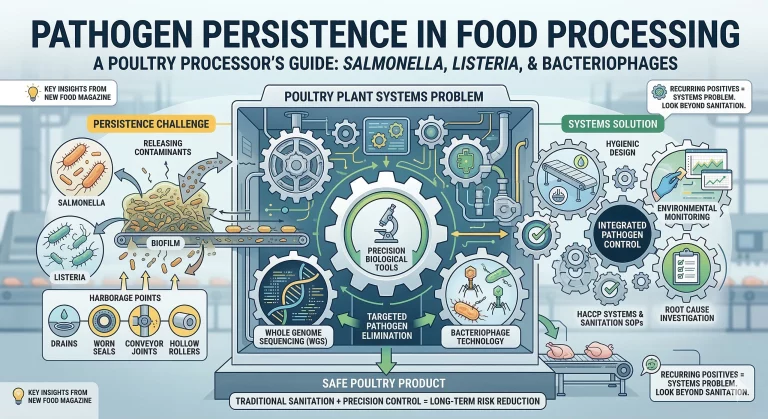
This shift presents an opportunity to move beyond traditional sanitation approaches and adopt more targeted, evidence-based interventions. Technologies that improve pathogen detection, monitoring, and control can help businesses reduce risk, strengthen compliance, and protect brand reputation.
As food safety expectations continue to rise, organisations that invest in preventive, science-led strategies will be best positioned to maintain consumer trust and ensure long-term operational resilience.
References
Department of Agriculture, Fisheries and Forestry. (2026). IFN 03-26: Changes to the inspection of imported melons.
Food Standards Australia New Zealand. (2025). FSANZ updates estimate of annual cost of foodborne illness.
Food Standards Australia New Zealand. (2025). Food safety requirements for horticulture: Berries, leafy vegetables and melons.
Food Standards Australia New Zealand. (2026). Australian food recall statistics.
Queensland Health. (2025). Enhancing foodborne disease surveillance across Australia: OzFoodNet annual report 2024 Queensland.